
Skip to content

Travelling to School or College

Children and young people are only eligible for free school transport in certain circumstances which are set out in government guidance. Most Hampshire children and young people are not eligible for free school transport, and over 90% of families arrange their own school journeys.

There are different options to get your child to and from school.

Public transport

You can view information about public transport in Hampshire. You can also read about concessionary bus passes and tickets.

Active travel, including walking to school

The Hampshire County Council Travel Planning Team work with school communities to develop travel plans that will promote safer, active and sustainable travel to school, with the support of key stakeholders including local residents. The aim of this work is to reduce the number of children being driven to and from school, to give you and your child the opportunity to exercise, reduce traffic and congestion around the school and improve air quality and the environment for the local community.

You can find out more about active travel on the My Journey Hampshire website. You can also check with your school whether they have a school travel plan.

Other sites for useful advice

The School Run has information about walking to school.

Walk, Wheel, Cycle Trust has information about walking, wheeling and cycling. 

Bikeability national cycle training has information to help equip children with the skills and confidence to cycle.

Planning your journey

Whether you’re looking for information about local cycle routes to work, walking maps or links to public transport, you can access it all on the My Journey Hampshire website.

Road safety information

Visit Hampshire County Council’s road safety webpages for more information, including details of School Crossing Patrols in Hampshire which provide safer routes to and from school for thousands of children and parents every day.
To qualify for transport assistance, children must be of compulsory school age AND one of these statements must also apply: 

  • You live more than 2 miles from their catchment or nearer school if under 8 years, or more than 3 miles away if 8 years or older.
  • You are in the receipt of the maximum amount of Universal Credit and live over 2 miles from your catchment or nearer school even if over 8 years old.
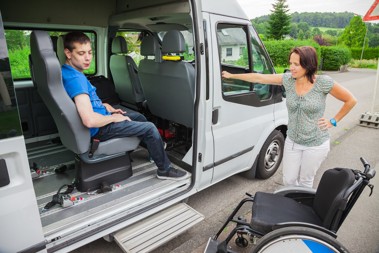
  • Your child has special needs or disability/health problems that makes it hard to walk to school, even when accompanied by an adult.
  • Your route to school has been recognised as ‘unsafe’ to walk even when accompanied by an adult. 

More information about the eligibility criteria.

To qualify for transport assistance, children must be of compulsory school age AND one of these statements must also apply: 

  • You live more than 2 miles from their catchment or nearer school if under 8 years, or more than 3 miles away if 8 years or older.
  • You are in the receipt of the maximum amount of Universal Credit and live over 2 miles from your catchment or nearer school even if over 8 years old.
  • Your child has special needs or disability/health problems that makes it hard to walk to school, even when accompanied by an adult.
  • Your route to school has been recognised as ‘unsafe’ to walk even when accompanied by an adult. 

More information about the eligibility criteria.

There is no automatic eligibility for travel assistance for children under compulsory school age attending an Early Years setting. For pupils attending a Specialist Early Years Placement, any request for transport assistance will be considered on a case-by-case basis. For some families, the service requires an annual parental contribution towards the costs of the transport

Parental contributions and other fees

Find out how much the parental contribution is for transport for children under compulsory school age.

There is no automatic eligibility for travel assistance for children under compulsory school age attending an Early Years setting. For pupils attending a Specialist Early Years Placement, any request for transport assistance will be considered on a case-by-case basis. For some families, the service requires an annual parental contribution towards the costs of the transport

Parental contributions and other fees

Find out how much the parental contribution is for transport for children under compulsory school age.

There is no automatic eligibility for County Council-funded transport for children who are not compulsory school age, including young people who have left Y11. However, the County Council recognises that families may need a transport service to ensure that young people with SEND over the age of 16 can access an educational setting that is suitable for their needs. As such, the County Council offers a transport service under discretionary powers. For some young people, the service requires an annual parental contribution towards the costs of the transport. 

To be eligible for Post-16 transport assistance, a young person with SEND must meet each of the following criteria which are set out in our Post-16 Transport Policy

  • The student has an Education, Health and Care Plan (EHCP) or has a disability which means they require transport arrangements to be provided. 
  • The student or parent can evidence that without transport assistance the student would be unable to attend their educational placement. 
  • The journey from/to school or college is at least 3 miles measured by the nearest available walking route OR the child’s needs mean that the student cannot reasonably be expected to walk to school. 
  • The student is attending the nearest school or college considered to be the most suitable placement.  

Parental contributions and other fees

Find out how much the how much the parental contribution is for Post-16 transport.

You can find out more about Post-16 Transport for young people with SEND on our Post-16 transport for young people with SEND webpage. 

There is no automatic eligibility for County Council-funded transport for children who are not compulsory school age, including young people who have left Y11. However, the County Council recognises that families may need a transport service to ensure that young people with SEND over the age of 16 can access an educational setting that is suitable for their needs. As such, the County Council offers a transport service under discretionary powers. For some young people, the service requires an annual parental contribution towards the costs of the transport. 

To be eligible for Post-16 transport assistance, a young person with SEND must meet each of the following criteria which are set out in our Post-16 Transport Policy

  • The student has an Education, Health and Care Plan (EHCP) or has a disability which means they require transport arrangements to be provided. 
  • The student or parent can evidence that without transport assistance the student would be unable to attend their educational placement. 
  • The journey from/to school or college is at least 3 miles measured by the nearest available walking route OR the child’s needs mean that the student cannot reasonably be expected to walk to school. 
  • The student is attending the nearest school or college considered to be the most suitable placement.  

Parental contributions and other fees

Find out how much the how much the parental contribution is for Post-16 transport.

You can find out more about Post-16 Transport for young people with SEND on our Post-16 transport for young people with SEND webpage. 

For children who are eligible, the transport provided may be a: 

  • personal transport budget 
  • contracted school bus 
  • free bus pass for public transport 
  • taxi service 

You can find more information in our School Transport Policy

You can find out more about School Transport travel arrangements, including types of transport assistance, what happens in the event of a cancellation, and other useful information about the service we provide. 

For children who are eligible, the transport provided may be a: 

  • personal transport budget 
  • contracted school bus 
  • free bus pass for public transport 
  • taxi service 

You can find more information in our School Transport Policy

You can find out more about School Transport travel arrangements, including types of transport assistance, what happens in the event of a cancellation, and other useful information about the service we provide. 

The statutory duty to provide School Transport applies to journeys to "qualifying schools". These are defined in Department of Education (DfE) guidance, but the definition does not include EOTISC settings. Therefore, there is not statutory duty to provide school transport (or help with costs) to these settings.

Applications for school transport for children/young people attending EOTISC provisions will be considered on a case-by-case basis and when necessary, in discussion with the SEN team. 

Speak to your child's EHC Case Co-ordinator in the first instance to discuss transport if your child in on an EOTISC package.

The statutory duty to provide School Transport applies to journeys to "qualifying schools". These are defined in Department of Education (DfE) guidance, but the definition does not include EOTISC settings. Therefore, there is not statutory duty to provide school transport (or help with costs) to these settings.

Applications for school transport for children/young people attending EOTISC provisions will be considered on a case-by-case basis and when necessary, in discussion with the SEN team. 

Speak to your child's EHC Case Co-ordinator in the first instance to discuss transport if your child in on an EOTISC package.

The School Transport Team aims to assess all applications within 10 working days, at which point you will receive a decision on whether your application has been approved and it may take a further 15 working days for transport to be arranged.

All applications for transport starting in September (except for those for children with an EHCP) need to be submitted by the 31st of May

Applications that were received after the deadline are treated as ‘late applications’ and will only be reviewed after all on-time applications are processed. For the families of eligible children who applied late, this means that transport may not be in place for the start of the school term in September.

For children with an EHCP, transport applications need to be submitted by the 30th of June. We appreciate that this deadline cannot always be adhered to as the EHCP may not be finalised or a school named until after this date, due to this an application made after the 30th of June will still be treated as an on-time application.

The School Transport Team aims to assess all applications within 10 working days, at which point you will receive a decision on whether your application has been approved and it may take a further 15 working days for transport to be arranged.

All applications for transport starting in September (except for those for children with an EHCP) need to be submitted by the 31st of May

Applications that were received after the deadline are treated as ‘late applications’ and will only be reviewed after all on-time applications are processed. For the families of eligible children who applied late, this means that transport may not be in place for the start of the school term in September.

For children with an EHCP, transport applications need to be submitted by the 30th of June. We appreciate that this deadline cannot always be adhered to as the EHCP may not be finalised or a school named until after this date, due to this an application made after the 30th of June will still be treated as an on-time application.