Skip to content

Local Area Partnership - Hampshire

The Hampshire Local Area Partnership draws together organisations that work with children and young people with SEND in Hampshire. This includes Education, Health, and Social Care, as well as voluntary sector organisations and those representing children, young people and families. These organisations are represented on Hampshire’s Local Area Partnership Board. The Board ensures all those organisations work together to deliver high quality, joined up care, education and health services across the Local Area in order that that children and young people with SEND achieve the best possible outcomes.

The board is joined by the Executive Lead Members for Children’s Services and the Lead Member for Education, and is co-chaired by the Director of Children’s Services and the Deputy Chief Delivery Officer and Director for Children's Care, Mental Health and Learning Disabilities and Autism.

The Board has completed its annual review of Hampshire Self Evaluation Framework (SEF) and has used the findings to develop its strategy and action plan for the next three to five years. You can find more information about the SEF, strategy and action plan below.
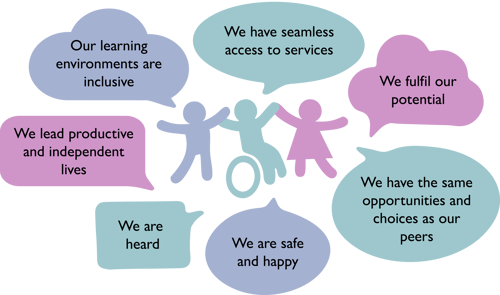
Children and young people in Hampshire:

  • Are heard
  • Are safe and happy
  • Have the same opportunities and choices as their peers
  • Fulfil their potential
  • Have inclusive learning environments
  • Have seamless access to services
  • Lead productive and independent lives.

Children and young people in Hampshire:

  • Are heard
  • Are safe and happy
  • Have the same opportunities and choices as their peers
  • Fulfil their potential
  • Have inclusive learning environments
  • Have seamless access to services
  • Lead productive and independent lives.

We will achieve our vision through strong multi agency and parental partnerships, having a shared understanding of challenges and working together on solutions.

We will measure progress by:
  • Bringing together Health, Education and Social Care data.
  • Tracking and reducing the gap between outcomes for children and young people with SEND and their peers.
  • Annually canvassing parents about their confidence in the system.
  • Annually canvassing professionals about system improvements.
  • Listening to children and young people about what matters to them and acting on their views.
We will work together well by:
  • Collectively owning the issues.
  • Securing cross- partnership agreement to progress all actions.
  • Spreading the word, creating a system-wide understanding of our ambition.
  • Routinely seeking the voice of all children and young people with SEND.
  • Holding ourselves and each other to account on delivery of our action plan. 
  • Monitoring our progress through our Local Area Partnership board.
  • Supporting and be honest with each other.
  • Asking for help to solve systemic problems.
  • Being critical friends for each other.
  • Reducing inequalities.

We will achieve our vision through strong multi agency and parental partnerships, having a shared understanding of challenges and working together on solutions.

We will measure progress by:
  • Bringing together Health, Education and Social Care data.
  • Tracking and reducing the gap between outcomes for children and young people with SEND and their peers.
  • Annually canvassing parents about their confidence in the system.
  • Annually canvassing professionals about system improvements.
  • Listening to children and young people about what matters to them and acting on their views.
We will work together well by:
  • Collectively owning the issues.
  • Securing cross- partnership agreement to progress all actions.
  • Spreading the word, creating a system-wide understanding of our ambition.
  • Routinely seeking the voice of all children and young people with SEND.
  • Holding ourselves and each other to account on delivery of our action plan. 
  • Monitoring our progress through our Local Area Partnership board.
  • Supporting and be honest with each other.
  • Asking for help to solve systemic problems.
  • Being critical friends for each other.
  • Reducing inequalities.
We will know we have succeeded when:
  • The views of children, young people and their families informs all our work.
  • Children, young people and their families can access the information and services they need when they need it.
  • Data is routinely shared, and we all work towards the same goals.
  • Children and young people with SEND are happy and have positive social relationships.
  • Young people with SEND increasingly live independently and gain meaningful employment.
  • There is a culture of support to families and carers.
  • Children and young people with SEND and their families can access services and support that meet their needs at the earliest point, without barriers.
  • The mental and physical health of children and young people with SEND compares positively with their peers.
  • Children and young people with SEND are engaged in their education within an inclusive environment.
  • Everyone in the system, works together to improve educational engagement.
  • A robust, resilient and skilled education workforce can meet SEND needs.
  • Children and young people with SEND and their parents are appropriately prepared for adult life from a young age.
  • There is sufficient provision to meet the needs of all Children and young people with SEND in Hampshire.
We will know we have succeeded when:
  • The views of children, young people and their families informs all our work.
  • Children, young people and their families can access the information and services they need when they need it.
  • Data is routinely shared, and we all work towards the same goals.
  • Children and young people with SEND are happy and have positive social relationships.
  • Young people with SEND increasingly live independently and gain meaningful employment.
  • There is a culture of support to families and carers.
  • Children and young people with SEND and their families can access services and support that meet their needs at the earliest point, without barriers.
  • The mental and physical health of children and young people with SEND compares positively with their peers.
  • Children and young people with SEND are engaged in their education within an inclusive environment.
  • Everyone in the system, works together to improve educational engagement.
  • A robust, resilient and skilled education workforce can meet SEND needs.
  • Children and young people with SEND and their parents are appropriately prepared for adult life from a young age.
  • There is sufficient provision to meet the needs of all Children and young people with SEND in Hampshire.
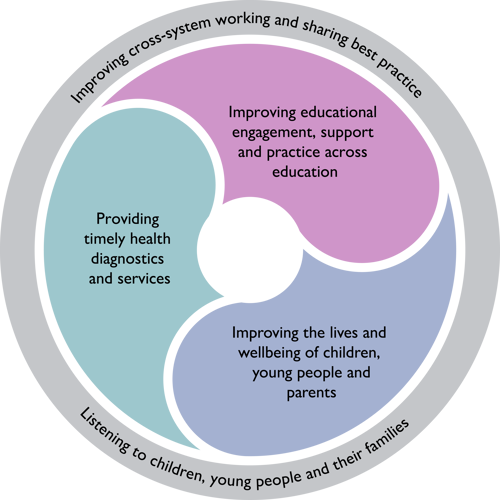
Our Action plan is broken down into the following areas with actions listed under each one:
  • Action Plan 1: Improving educational engagement, support and practice across education settings
  • Action Plan 2: Improving the lives and wellbeing of children, young people and their families
  • Action Plan 3: Providing timely health diagnostics and services.

Our Action plan is broken down into the following areas with actions listed under each one:
  • Action Plan 1: Improving educational engagement, support and practice across education settings
  • Action Plan 2: Improving the lives and wellbeing of children, young people and their families
  • Action Plan 3: Providing timely health diagnostics and services.

Ofsted and the Care Quality Commission (CQC) have published a new Area SEND inspection Framework

The framework outlines a new inspection model. All Local Area Partnerships will be subject to this including:

  • full inspections
  • monitoring inspections
  • engagement meetings, and
  • area SEND thematic visits

This inspection process will consider:

  • The experiences and outcomes of children & young people with SEND; and
  • How local area partners work together to plan, evaluate and develop the SEND system.

The inspection findings and outcomes will be published. 

Where appropriate, recommendations will be made to the Local Area Partnership about what they should do to improve the SEND arrangements it has in place for children and young people. 

The Local Area was last inspected in March 2020. The findings of this inspection can be found here: Area SEND Inspection Report


Information about upcoming inspections will be published in this area once a date for the visit has been set. 


To find out more about local area SEND inspections on the Government's website or watch the video below.


Ofsted and the Care Quality Commission (CQC) have published a new Area SEND inspection Framework

The framework outlines a new inspection model. All Local Area Partnerships will be subject to this including:

  • full inspections
  • monitoring inspections
  • engagement meetings, and
  • area SEND thematic visits

This inspection process will consider:

  • The experiences and outcomes of children & young people with SEND; and
  • How local area partners work together to plan, evaluate and develop the SEND system.

The inspection findings and outcomes will be published. 

Where appropriate, recommendations will be made to the Local Area Partnership about what they should do to improve the SEND arrangements it has in place for children and young people. 

The Local Area was last inspected in March 2020. The findings of this inspection can be found here: Area SEND Inspection Report


Information about upcoming inspections will be published in this area once a date for the visit has been set. 


To find out more about local area SEND inspections on the Government's website or watch the video below.


Find out more about the Local Area Partnership and Inspection by watching the video, and the accompanying Frequently Asked Questions document :


Additional resources

Find out more about the Local Area Partnership and Inspection by watching the video, and the accompanying Frequently Asked Questions document :


Additional resources

The Best Practice Platform is a shared space for professionals, health, social care, and the voluntary sector, this library is dedicated to showcasing and celebrating effective practices that support children and young people with Special Educational Needs and Disabilities (SEND).

The Best Practice Platform is a shared space for professionals, health, social care, and the voluntary sector, this library is dedicated to showcasing and celebrating effective practices that support children and young people with Special Educational Needs and Disabilities (SEND).