Skip to content

The hidden dangers of easy money

Everyone wants to feel accepted, valued and like they belong. Friends and groups can help you grow in confidence, have fun and feel supported. But sometimes criminal gangs take advantage of young people who may be looking for friendship, excitement, money, support or a sense of belonging.

They often do this through a process called grooming. This is when someone builds a relationship with you and gains your trust before trying to exploit or manipulate you. They may offer friendship, gifts, money, food, alcohol, drugs, status or protection. Over time, they may start to control you through threats, intimidation, violence or by making you feel like you owe them something.

What can seem exciting at first can quickly become dangerous. You might feel pressured to do things you don't want to do or find it difficult to get away from the situation. If something doesn't feel right, it's important to talk to someone you trust and get support.

Criminal gangs often target young people who are looking for friendship, money, excitement or a sense of belonging. Knowing the warning signs can help keep you safe.
Top tips for staying safe:

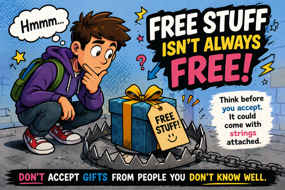
  • Be cautious if someone you do not know well offers you money, gifts, expensive clothes, trainers or a mobile phone. Exploitative relationships often start with seemingly kind gestures.
  • Think carefully about job offers or opportunities that seem too good to be true, especially if they involve travelling, collecting parcels or carrying items for someone else.
  • Be careful online. Some gangs use social media and messaging apps to contact and groom young people.
  • Talk to a trusted adult if someone is pressuring you to keep secrets, break the law or do something that makes you feel uncomfortable.
  • Choose friendships and groups that make you feel safe, respected and valued. Real friends will not threaten, pressure or control you.
  • Trust your instincts. If something does not feel right, speak to someone you trust.
  • Remember that asking for help is a sign of strength. If you are worried about yourself or a friend, support is available.

Remember

You should never have to earn friendship, protection or belonging by carrying drugs, money, weapons or packages for someone else. You deserve to be safe, respected and supported.

Criminal gangs often target young people who are looking for friendship, money, excitement or a sense of belonging. Knowing the warning signs can help keep you safe.

Top tips for staying safe:

  • Be cautious if someone you do not know well offers you money, gifts, expensive clothes, trainers or a mobile phone. Exploitative relationships often start with seemingly kind gestures.
  • Think carefully about job offers or opportunities that seem too good to be true, especially if they involve travelling, collecting parcels or carrying items for someone else.
  • Be careful online. Some gangs use social media and messaging apps to contact and groom young people.
  • Talk to a trusted adult if someone is pressuring you to keep secrets, break the law or do something that makes you feel uncomfortable.
  • Choose friendships and groups that make you feel safe, respected and valued. Real friends will not threaten, pressure or control you.
  • Trust your instincts. If something does not feel right, speak to someone you trust.
  • Remember that asking for help is a sign of strength. If you are worried about yourself or a friend, support is available.

Remember

You should never have to earn friendship, protection or belonging by carrying drugs, money, weapons or packages for someone else. You deserve to be safe, respected and supported.

Many young people do not realise they are being exploited at first.

What may begin as friendship, gifts, money, protection or a sense of belonging can gradually change into pressure, control and fear. A young person may feel trapped because they have been threatened, blackmailed or made to feel they owe the gang something.

Some young people are pressured to:

  • Carry drugs, money or weapons
  • Travel to unfamiliar places
  • Miss school or college
  • Keep secrets from family and friends
  • Distance themselves from people who care about them

Over time, involvement can affect every part of a young person's life, including their education, mental health, safety and future opportunities. Young people may experience anxiety, fear, trauma, violence or exploitation.

Criminal gangs often want young people to believe there is no way out.

This is not true.

Support is available, and young people who have been exploited can be helped to become safe and rebuild their lives.

Remember

If someone offers you friendship, protection or belonging, but then asks you to break the law, carry drugs or money, keep secrets, or do things that make you feel uncomfortable, they are not acting in your best interests.

Real friends do not control, threaten or exploit people.

Many young people do not realise they are being exploited at first.

What may begin as friendship, gifts, money, protection or a sense of belonging can gradually change into pressure, control and fear. A young person may feel trapped because they have been threatened, blackmailed or made to feel they owe the gang something.

Some young people are pressured to:

  • Carry drugs, money or weapons
  • Travel to unfamiliar places
  • Miss school or college
  • Keep secrets from family and friends
  • Distance themselves from people who care about them

Over time, involvement can affect every part of a young person's life, including their education, mental health, safety and future opportunities. Young people may experience anxiety, fear, trauma, violence or exploitation.

Criminal gangs often want young people to believe there is no way out.

This is not true.

Support is available, and young people who have been exploited can be helped to become safe and rebuild their lives.

Remember

If someone offers you friendship, protection or belonging, but then asks you to break the law, carry drugs or money, keep secrets, or do things that make you feel uncomfortable, they are not acting in your best interests.

Real friends do not control, threaten or exploit people.

If you have been affected by a gang, County Lines, grooming or exploitation, this is important:

What happened is not your fault.

Many young people are drawn in because someone offered them friendship, support, protection or a place to belong. The people who exploit children are often very skilled at gaining trust and making young people feel valued before things change. Children and young people who become involved are often victims of exploitation rather than willing participants.

You may feel frightened, trapped, embarrassed or worried about what might happen if you speak out. You may have been told that nobody will believe you, that you will get into trouble, or that there is no way out.

Those things are not true.

There are adults and organisations that understand what exploitation looks like and know how to help. Support is available, and you do not have to face things on your own.

No matter what has happened:

  • You deserve to be safe.
  • You deserve to be treated with respect.
  • You deserve support without judgement.
  • You deserve the chance to move forward and build the future you want.

Asking for help can feel difficult, but it can also be the first step towards taking back control of your life.

Your story is not over. Your past does not define your future. 

If you are worried about yourself or a friend, speak to a trusted adult today. There are people who will listen, believe you and help you stay safe.

If you have been affected by a gang, County Lines, grooming or exploitation, this is important:

What happened is not your fault.

Many young people are drawn in because someone offered them friendship, support, protection or a place to belong. The people who exploit children are often very skilled at gaining trust and making young people feel valued before things change. Children and young people who become involved are often victims of exploitation rather than willing participants.

You may feel frightened, trapped, embarrassed or worried about what might happen if you speak out. You may have been told that nobody will believe you, that you will get into trouble, or that there is no way out.

Those things are not true.

There are adults and organisations that understand what exploitation looks like and know how to help. Support is available, and you do not have to face things on your own.

No matter what has happened:

  • You deserve to be safe.
  • You deserve to be treated with respect.
  • You deserve support without judgement.
  • You deserve the chance to move forward and build the future you want.

Asking for help can feel difficult, but it can also be the first step towards taking back control of your life.

Your story is not over. Your past does not define your future. 

If you are worried about yourself or a friend, speak to a trusted adult today. There are people who will listen, believe you and help you stay safe.

If someone is controlling you, forcing you to do things you don't want to do, making you carry illegal items, or exploiting you online, it is not your fault. Telling a teacher, a youth worker, or a professional takes massive courage but it is the right thing to do to make sure you are safe.

When you tell a teacher social worker or professional, they should fill in an Inter Agency Referral Form which is then discussed by the Multi-Agency Safeguarding Hub (MASH).

This team that looks at concerns when someone is worried that a child or young person may not be safe or may need extra support. They gather information from different services and decide what help might be needed.

The Willow Team is a specialist team of social workers and police officers who protect young people from exploitation. The Willow Team is made up of specially trained professionals who work together to protect young people, understand what is happening, and help them stay safe. They will listen to you, support you and work with other services to make sure you get the help you need.

If someone is controlling you, forcing you to do things you don't want to do, making you carry illegal items, or exploiting you online, it is not your fault. Telling a teacher, a youth worker, or a professional takes massive courage but it is the right thing to do to make sure you are safe.

When you tell a teacher social worker or professional, they should fill in an Inter Agency Referral Form which is then discussed by the Multi-Agency Safeguarding Hub (MASH).

This team that looks at concerns when someone is worried that a child or young person may not be safe or may need extra support. They gather information from different services and decide what help might be needed.

The Willow Team is a specialist team of social workers and police officers who protect young people from exploitation. The Willow Team is made up of specially trained professionals who work together to protect young people, understand what is happening, and help them stay safe. They will listen to you, support you and work with other services to make sure you get the help you need.