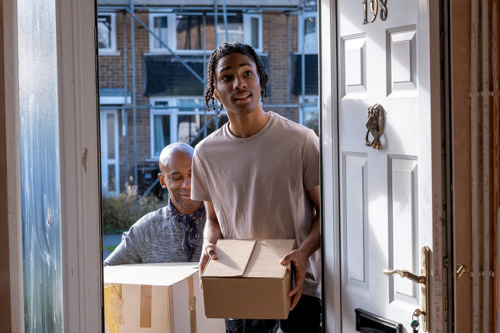
Your home should be a place where you feel safe, comfortable and secure. As a care leaver, you may find that living independently is exciting but also challenging at times. It is normal to have questions about managing a home, paying bills, dealing with visitors or knowing what to do if something goes wrong.
Living independently also means taking steps to protect yourself, your belongings and your personal information. This includes keeping your home secure, being careful online, knowing who to contact in an emergency and understanding how to stay safe if you live alone.
Remember: Living independently does not mean being completely alone. Your Personal Adviser, support workers, housing providers and trusted adults can all help you feel safe, settled and confident in your home.
Tips for securing your home:
Always lock your doors and windows, even when you are at home or only stepping out for a short time.
Keep your keys in a safe place and avoid leaving them in the door.
If somebody knocks on your door, ask who they are before opening it.
Ask to see identification from anyone claiming to be from a utility company, housing provider or other organisation, even the police.
Never give money or personal details to someone who arrives unexpectedly at your home.
Part of keeping your home secure, is being mindful of who you let in:
You decide who comes into your home and who you spend time with.
Do not feel pressured into letting people stay if you do not want them to.
If someone makes you feel uncomfortable, unsafe or pressured, speak to someone you trust.
What is Cuckooing?
Cuckooing is when someone takes over another person's home without permission. They may move in, stay for long periods, bring other people into the property, or use the home for things the tenant does not want or feel comfortable with.
People who carry out cuckooing often target those who may be vulnerable, isolated, or living on their own. They may start by acting friendly, asking for a favour, or saying they have nowhere else to stay. Over time, they may take control of the home and make it difficult for the tenant to say no.
Thanks to Yorkshire Police for this video
If you are worried speak to someone you trust as soon as possible, such as:
Your Personal Adviser (PA)
A support worker
Your housing provider or landlord
A trusted friend or family member
The police if you feel unsafe
If you believe you are in immediate danger, call 999.
Remember: If someone has taken over your home or is making you feel unsafe in your own property, it is not your fault and support is available to help you.
Devices such as Ring doorbells, smart cameras and security systems can help some people feel safer and more secure at home.
Before installing any equipment:
Check your tenancy agreement.
Ask your landlord for permission if the device needs to be attached to the building.
Make sure you understand any subscription or running costs.
Think carefully about privacy and avoid recording areas where neighbours would expect privacy.
If you're unsure whether you can install a device, speak to your landlord or housing provider first.
Keep important numbers saved in your phone:
999 for emergencies
101 for non-emergency police matters
111 for urgent health advice
Your Personal Adviser
Your housing provider or landlord
Out-of-hours support services
Keep your phone charged and easy to find in case you need help.
Keep important numbers saved in your phone:
999 for emergencies
101 for non-emergency police matters
111 for urgent health advice
Your Personal Adviser
Your housing provider or landlord
Out-of-hours support services
Keep your phone charged and easy to find in case you need help.
Hampshire & Isle of Wight Fire and Rescue Service video - Fire safety at home
Check your smoke alarms
Test your smoke alarms every month by pressing the test button.
If an alarm is not working, report it to your landlord, housing provider or support worker.
Reduce fire risks
Turn off hair straighteners, curling tongs, irons and other electrical appliances when you have finished using them.
Never leave cooking unattended.
Avoid overloading plug sockets.
Keep hallways, stairs and exits clear so you can leave quickly in an emergency.
Know your escape route
Think about how you would get out of your home if there was a fire.
Make sure everyone living in the property knows the safest way to leave.
A stopcock is a valve that controls the water supply to your home. If you have a burst pipe or water leak, turning off the stopcock can help prevent serious damage.
When you move into a new home, locate the stopcock and take a photo of it on your phone. If you ever have a burst pipe or serious leak, you'll be able to find it quickly and shut the water off before major damage is caused.
Where can I find it?
Common places include:
Under the kitchen sink.
In a utility room.
Under the stairs.
Near the front door.
In a cupboard close to where the water pipe enters the property.
When you move in, it's a good idea to find your stopcock and check that you know how to turn it on and off.
How do you know you've found it?
A good clue is:
✅ It's attached to the thick water pipe coming into the property.
✅ Turning it clockwise (usually) makes it harder to turn and eventually stops the water supply.
✅ Nearby pipes often branch off to taps, toilets and appliances.
How to find and use a stopcock
Protect your personal information
Do not share your address, bank details or other personal information online.
Be careful about posting photos that show where you live.
Keep your accounts secure
Use strong passwords and keep them private.
Avoid sharing passwords with other people.
Be cautious online
Remember that people online may not always be who they claim to be.
If you receive a message that seems unusual, contact the person another way to check it is really them.
Speak to someone you trust if you are unsure about an online conversation.
Meeting people you've met online
Never meet somebody alone if you have only spoken to them online.
If you decide to meet someone, talk to a trusted adult first and meet in a public place.
If something does not feel right, trust your instincts.
Speak to:
Your Personal Adviser
A support worker
A trusted friend or family member
Your housing provider
If you are in immediate danger or someone is threatening you, call 999 straight away.
If something does not feel right, trust your instincts.
Speak to:
Your Personal Adviser
A support worker
A trusted friend or family member
Your housing provider
If you are in immediate danger or someone is threatening you, call 999 straight away.