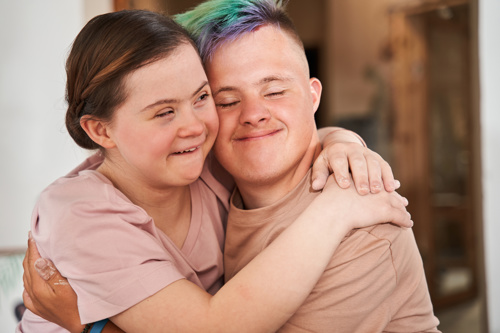
Thinking about sex, relationships or your body can bring up lots of questions — and that’s completely normal. Whether you’re curious, unsure, or just want to understand your options, this section is here to help you find clear, honest information.
Here you’ll find advice about relationships, sex, sexting (sending images), and pregnancy, as well as how to stay safe both online and in real life. You might be thinking about what’s right for you, how to deal with pressure from others, or what to do if something has already happened — whatever your situation, you’re not alone.
We aim to give you the facts so you can:
make choices that feel right for you
understand your rights and boundaries
stay safe and look after your wellbeing
There’s no judgement here. Everyone’s experiences and feelings are different, and it’s okay to take your time, ask questions, and get support if you need it.
What is contraception?
Contraceptive methods protect against pregnancy. If you use contraception correctly, you can have sex without worrying about getting pregnant or getting someone pregnant.
Most methods of contraception won’t protect you against catching or passing on a sexually transmitted infection (STI). Condoms are the only method that protects against both STIs and pregnancy. Protect your own and your partner’s health by using condoms as well as your chosen method of contraception.
Will they tell my parents?
Contraception services are free and confidential, including for people under 16 years old. This means the doctor or nurse won’t tell your parents or anyone else, as long as they believe you’re mature enough to understand the information and decisions involved.
There are strict guidelines for medical professionals who work with people under 16. If they believe there’s a risk to your safety and welfare, they may decide to tell your parents.
Where to get free contraception
You can get free contraception and condoms from:
some GP surgeries - talk to your GP or practice nurse
community contraceptive clinics
some genitourinary medicine (GUM) clinics
sexual health clinics – these offer contraceptive and STI testing services
Contraceptive methods protect against pregnancy. If you use contraception correctly, you can have sex without worrying about getting pregnant or getting someone pregnant.
Most methods of contraception won’t protect you against catching or passing on a sexually transmitted infection (STI). Condoms are the only method that protects against both STIs and pregnancy. Protect your own and your partner’s health by using condoms as well as your chosen method of contraception.
Will they tell my parents?
Contraception services are free and confidential, including for people under 16 years old. This means the doctor or nurse won’t tell your parents or anyone else, as long as they believe you’re mature enough to understand the information and decisions involved.
There are strict guidelines for medical professionals who work with people under 16. If they believe there’s a risk to your safety and welfare, they may decide to tell your parents.
Where to get free contraception
You can get free contraception and condoms from:
some GP surgeries - talk to your GP or practice nurse
community contraceptive clinics
some genitourinary medicine (GUM) clinics
sexual health clinics – these offer contraceptive and STI testing services
Discovering you might be pregnant as a teenager can feel overwhelming — but you are not alone. There is help, support, and confidential advice available to guide you through your options and next steps. This page brings together key information inspired by trusted organisations.
I might be pregnant; what should I do first?
If you think you might be pregnant, the first step is to take a pregnancy test.
It is often a good idea to access a pregnancy test through the sexual health service or with a youth worker as they can give you immediate support, advice and guidance to help you.
Talking to someone you trust
If the test is positive, it’s helpful to speak to a health professional or another trusted adult who can explain your options without judgment.
This might be:
A parent or carer
A school nurse
A trusted teacher
A youth worker or support charity
Talking things through can help you feel less alone and more in control.
If you feel unable to parent but want to continue the pregnancy, adoption is an option. There are many people who are waiting for the gift of a child to love and you may still be able to find out how your child is doing through letters from their adoptive parents. Specialist services can guide you through the process with compassion.
Up to 24 weeks of pregnancy, you are able to get an abortion. After 24 weeks, a doctor will only agree to end a pregnancy under certain conditions. If you chose to end your pregnancy your health professional can explain:
Available procedures
What to expect
Aftercare and emotional support
If you are unsure if you want to continue with the pregnancy, you can discuss all your options with the British Pregnancy Advice Service.
You do not need a referral to get an abortion. Call BPAS on 0300 333 68 28 to discuss your options or book an appointment through them directly.
All options are your choice, and professionals must respect your decision.
Listen to Olga talk about finding out how she was pregnant as a teenager and how she navigated the situation.
Support for Young Parents
Becoming a young parent can come with challenges, but many services exist to help you thrive. If you decide to become a parent and raise the baby, your GP will refer you to a named midwife who can arrange antenatal care.
The Family Nurse Partnership (FNP) is a voluntary programme offered to first time mums and dads aged under 19. If you are looking for support, and would like to find out more information as to whether you would be able to join the programme, you can email: hiowh.fnphampshire@nhs.net or call on 0300 003 0338. View the FNP Facebook Page.
What does the Family Nurse Partnership offer? Watch the video below.
Education & employment
If you are under 16, you will continue to be entitled to an education and we will work with you to ensure you can still access this. There are also schemes and support to help you continue in your education all the way to university if that is what you want.
The Bright Beginnings service gives one-to-one support to young parents aged 17-25 and their babies, through pregnancy up until the baby’s second birthday.
Support is given by trained volunteer Bright Beginnings Befrienders. They are matched with the young parents and will be there as a trusted, reliable and knowledgeable adult for the parents to get support from.
Befrienders will meet with parents regularly and are there to offer support with anything they may be struggling with, in particular the health of the parents and their baby and all aspects of parenting.
Discovering you might be pregnant as a teenager can feel overwhelming — but you are not alone. There is help, support, and confidential advice available to guide you through your options and next steps. This page brings together key information inspired by trusted organisations.
I might be pregnant; what should I do first?
If you think you might be pregnant, the first step is to take a pregnancy test.
It is often a good idea to access a pregnancy test through the sexual health service or with a youth worker as they can give you immediate support, advice and guidance to help you.
Talking to someone you trust
If the test is positive, it’s helpful to speak to a health professional or another trusted adult who can explain your options without judgment.
This might be:
A parent or carer
A school nurse
A trusted teacher
A youth worker or support charity
Talking things through can help you feel less alone and more in control.
If you feel unable to parent but want to continue the pregnancy, adoption is an option. There are many people who are waiting for the gift of a child to love and you may still be able to find out how your child is doing through letters from their adoptive parents. Specialist services can guide you through the process with compassion.
Up to 24 weeks of pregnancy, you are able to get an abortion. After 24 weeks, a doctor will only agree to end a pregnancy under certain conditions. If you chose to end your pregnancy your health professional can explain:
Available procedures
What to expect
Aftercare and emotional support
If you are unsure if you want to continue with the pregnancy, you can discuss all your options with the British Pregnancy Advice Service.
You do not need a referral to get an abortion. Call BPAS on 0300 333 68 28 to discuss your options or book an appointment through them directly.
All options are your choice, and professionals must respect your decision.
Listen to Olga talk about finding out how she was pregnant as a teenager and how she navigated the situation.
Support for Young Parents
Becoming a young parent can come with challenges, but many services exist to help you thrive. If you decide to become a parent and raise the baby, your GP will refer you to a named midwife who can arrange antenatal care.
The Family Nurse Partnership (FNP) is a voluntary programme offered to first time mums and dads aged under 19. If you are looking for support, and would like to find out more information as to whether you would be able to join the programme, you can email: hiowh.fnphampshire@nhs.net or call on 0300 003 0338. View the FNP Facebook Page.
What does the Family Nurse Partnership offer? Watch the video below.
Education & employment
If you are under 16, you will continue to be entitled to an education and we will work with you to ensure you can still access this. There are also schemes and support to help you continue in your education all the way to university if that is what you want.
The Bright Beginnings service gives one-to-one support to young parents aged 17-25 and their babies, through pregnancy up until the baby’s second birthday.
Support is given by trained volunteer Bright Beginnings Befrienders. They are matched with the young parents and will be there as a trusted, reliable and knowledgeable adult for the parents to get support from.
Befrienders will meet with parents regularly and are there to offer support with anything they may be struggling with, in particular the health of the parents and their baby and all aspects of parenting.
Sexuality describes how you express yourself in a sexual way. Part of your sexuality is your sexual orientation, which refers to who you’re attracted to, want to have sex with and fall in love with. You might also want to date both genders or you might not be interested in either or having a relationship at all. Or you might be confused about how you feel all together, if you do, don't worry, some people know from an early age and some may not know until they are older and more comfortable with themselves.
Some people are really confident at displaying their sexuality but it's not easy for everyone, however there are loads of different organisations throughout Hampshire and Nationally that can offer support, information and groups of like-minded people.
Organisations supporting LGBTQ+ people:
Consortium This membership organisation work to support LGBT+ organisations and projects around the country. Use the site's Member's Directory to find local mental health services.
Mind LGBTQ Get information about mental health support for people who are lesbian, gay, bisexual, trans, intersex, non-binary, queer or questioning (LGBTIQ).
Pink Therapy Pink Therapy has an online directory of therapists who work with people who are lesbian, gay, bisexual, transgender, intersex and queer or questioning (LGBTIQ), and people who are gender- and sexual-diverse (GSD).
Switchboard LGBT+ Helpline Switchboard provides a listening service for LGBT+ people over the phone, via email and online chat. It can provide you with contact details of an LGBT-friendly therapist.
Mind Out provides face to face mental health support in Sussex but support people who live any where in the UK online.
Imaan Imaan is a charity that supports lesbian, gay, bisexual, trans, queer or questioning (LGBTQ) Muslims, providing an online forum where people can share experiences and ask for help.
Also remember that no-one should have to go through any discrimination or bullying, if you or a friend is experiencing anything, you need to make sure you speak to an adult you trust as soon as possible.
Sexuality describes how you express yourself in a sexual way. Part of your sexuality is your sexual orientation, which refers to who you’re attracted to, want to have sex with and fall in love with. You might also want to date both genders or you might not be interested in either or having a relationship at all. Or you might be confused about how you feel all together, if you do, don't worry, some people know from an early age and some may not know until they are older and more comfortable with themselves.
Some people are really confident at displaying their sexuality but it's not easy for everyone, however there are loads of different organisations throughout Hampshire and Nationally that can offer support, information and groups of like-minded people.
Organisations supporting LGBTQ+ people:
Consortium This membership organisation work to support LGBT+ organisations and projects around the country. Use the site's Member's Directory to find local mental health services.
Mind LGBTQ Get information about mental health support for people who are lesbian, gay, bisexual, trans, intersex, non-binary, queer or questioning (LGBTIQ).
Pink Therapy Pink Therapy has an online directory of therapists who work with people who are lesbian, gay, bisexual, transgender, intersex and queer or questioning (LGBTIQ), and people who are gender- and sexual-diverse (GSD).
Switchboard LGBT+ Helpline Switchboard provides a listening service for LGBT+ people over the phone, via email and online chat. It can provide you with contact details of an LGBT-friendly therapist.
Mind Out provides face to face mental health support in Sussex but support people who live any where in the UK online.
Imaan Imaan is a charity that supports lesbian, gay, bisexual, trans, queer or questioning (LGBTQ) Muslims, providing an online forum where people can share experiences and ask for help.
Also remember that no-one should have to go through any discrimination or bullying, if you or a friend is experiencing anything, you need to make sure you speak to an adult you trust as soon as possible.
Forming healthy relationships is really important, you will have close relationships with friends, family, boyfriends and girlfriends. As you get older your relationships will change and develop and you get to know what you enjoy about a relationship and what you don't.
Not all relationships will work out and the person your involved with, may try and make you do things that you are not comfortable with or force you into things.
People who do this may want you to be their friend, girlfriend or boyfriend. They might offer your gifts or shower you with compliments, they also may use force, violence, bribery and humiliation to get you to do things that you don't want to, including having sex with you against your will.
Being aware of the warning signs is really important as sexual exploitation can happen to anyone, regardless of age, ethnicity and gender.
If you're worried about the situation that you are in or you're worried about a friend or family member, then there are lots of people you can talk to, don't bottle it up.
Forming healthy relationships is really important, you will have close relationships with friends, family, boyfriends and girlfriends. As you get older your relationships will change and develop and you get to know what you enjoy about a relationship and what you don't.
Not all relationships will work out and the person your involved with, may try and make you do things that you are not comfortable with or force you into things.
People who do this may want you to be their friend, girlfriend or boyfriend. They might offer your gifts or shower you with compliments, they also may use force, violence, bribery and humiliation to get you to do things that you don't want to, including having sex with you against your will.
Being aware of the warning signs is really important as sexual exploitation can happen to anyone, regardless of age, ethnicity and gender.
If you're worried about the situation that you are in or you're worried about a friend or family member, then there are lots of people you can talk to, don't bottle it up.
‘Sending nudes’ specifically refers to the act of sending naked photos of yourself to someone else, but is used more broadly to mean sending photos of yourself which are sexually explicit including ‘semi-nudes’ or topless shots.
Like with sexting, it can be a way of people flirting and engaging sexually with people digitally, whether or not they intend to be physically sexual with that person.
Sending nudes and the law
It is illegal to send naked images or videos of, or to, people under 18. This means that, if you are under 18, you should not be sending or receiving sexually explicit images even if you are in a sexual relationship with the other person/people. If you are over 18, it is illegal for you to receive sexually explicit photos of someone who is under 18.
What if I’m sending images of myself to my partner?
If you are under 18, any nudes or sexually explicit images you take of yourself will be considered Youth Produced Sexual Imagery (YPSI) and sharing them is illegal. This is the case even if it is with someone you are in a relationship with, you are having sex with and/or they are the same age as you.
If you receive images and you think a child or young person may be being exploited, or if someone has sexual images of you and you are under 18, you should speak with a trusted adult or someone at an organisation like Childline .
Consent
You should never be pressured into doing or sending something you don’t want to, and this includes sexting or sending nudes. You should also never pressure someone into sending you sexual messages, or send them sexual messages without their consent. More information about consent.
Think about if you really want to send sexts or nudes, or if you being pressured into it by someone. Do you feel like you need to because “everyone’s doing it” or because it will get someone to like you more? If you feel uncomfortable about the idea of sexting or sending nudes, or you just aren’t sure, then you don’t have to do it.
It’s also important to remember that sexting isn’t a contract for further sexual behaviour. You may be enjoying exchanging sexual messages with someone and sharing in a fantasy with them, but this doesn’t mean you have to do anything else sexual with them, even if you are in a relationship. It is normal to want to flirt and express your sexual desires to someone without wanting to act on them in a physical way.
Know the risks
There are a number of potential pitfalls or consequences linked to sending nudes, some of which may not seem obvious at the time.
It’s important to know that once you send or upload an image or video, you lose all control over it. Everything you share could be sent to someone else or posted online and potentially seen by anyone, including your friends, family and total strangers. People can take screenshots and capture your image on their phone, even if you send a photo with a time limit. Those messages, images or video could potentially exist forever and could resurface when you least expect it.
Whenever you are thinking of sending someone nudes you should consider:
Can you be sure that the person you are sending photos to won’t show their friends or post them publicly online?
Is the phone being used by the person you’re sexting 100% secure at all times or is there a chance that someone else might unlock their phone and find your messages?
Could someone see an image on their phone over their shoulder?
If you meet someone online and decide to start sexting with them, are you absolutely sure they are who they say they are? Remember: it’s easy to pretend to be someone you are not online.
Could you be putting yourself at risk of blackmail or bullying? If someone has private images of you or messages from you, they could use them against you.
Are you opening yourself up to unwanted attention from dangerous people on the internet? Sex offenders are often experts when it comes to finding these images and distributing them.
Are you breaking the law? Sending nudes can feel harmless but receiving or sending sexually explicit pictures of a person under 18 is illegal, even if they were taken with their permission, and even if they are photos that they took of themselves.
Intimate Image Abuse
Intimate image abuse (also known as ‘revenge porn’) is when someone takes or shares an intimate image of someone else, with the intention to humiliate, intimidate, alarm or distress the person. It is never okay to do this, and is a violation of someone’s consent.
If you are a victim of this, you don’t have to deal with it alone. You can speak to a trusted adult and/or contact Childline. You can also contact the Revenge Porn Helpline on their website or by calling 0345 6000 459.
‘Sending nudes’ specifically refers to the act of sending naked photos of yourself to someone else, but is used more broadly to mean sending photos of yourself which are sexually explicit including ‘semi-nudes’ or topless shots.
Like with sexting, it can be a way of people flirting and engaging sexually with people digitally, whether or not they intend to be physically sexual with that person.
Sending nudes and the law
It is illegal to send naked images or videos of, or to, people under 18. This means that, if you are under 18, you should not be sending or receiving sexually explicit images even if you are in a sexual relationship with the other person/people. If you are over 18, it is illegal for you to receive sexually explicit photos of someone who is under 18.
What if I’m sending images of myself to my partner?
If you are under 18, any nudes or sexually explicit images you take of yourself will be considered Youth Produced Sexual Imagery (YPSI) and sharing them is illegal. This is the case even if it is with someone you are in a relationship with, you are having sex with and/or they are the same age as you.
If you receive images and you think a child or young person may be being exploited, or if someone has sexual images of you and you are under 18, you should speak with a trusted adult or someone at an organisation like Childline .
Consent
You should never be pressured into doing or sending something you don’t want to, and this includes sexting or sending nudes. You should also never pressure someone into sending you sexual messages, or send them sexual messages without their consent. More information about consent.
Think about if you really want to send sexts or nudes, or if you being pressured into it by someone. Do you feel like you need to because “everyone’s doing it” or because it will get someone to like you more? If you feel uncomfortable about the idea of sexting or sending nudes, or you just aren’t sure, then you don’t have to do it.
It’s also important to remember that sexting isn’t a contract for further sexual behaviour. You may be enjoying exchanging sexual messages with someone and sharing in a fantasy with them, but this doesn’t mean you have to do anything else sexual with them, even if you are in a relationship. It is normal to want to flirt and express your sexual desires to someone without wanting to act on them in a physical way.
Know the risks
There are a number of potential pitfalls or consequences linked to sending nudes, some of which may not seem obvious at the time.
It’s important to know that once you send or upload an image or video, you lose all control over it. Everything you share could be sent to someone else or posted online and potentially seen by anyone, including your friends, family and total strangers. People can take screenshots and capture your image on their phone, even if you send a photo with a time limit. Those messages, images or video could potentially exist forever and could resurface when you least expect it.
Whenever you are thinking of sending someone nudes you should consider:
Can you be sure that the person you are sending photos to won’t show their friends or post them publicly online?
Is the phone being used by the person you’re sexting 100% secure at all times or is there a chance that someone else might unlock their phone and find your messages?
Could someone see an image on their phone over their shoulder?
If you meet someone online and decide to start sexting with them, are you absolutely sure they are who they say they are? Remember: it’s easy to pretend to be someone you are not online.
Could you be putting yourself at risk of blackmail or bullying? If someone has private images of you or messages from you, they could use them against you.
Are you opening yourself up to unwanted attention from dangerous people on the internet? Sex offenders are often experts when it comes to finding these images and distributing them.
Are you breaking the law? Sending nudes can feel harmless but receiving or sending sexually explicit pictures of a person under 18 is illegal, even if they were taken with their permission, and even if they are photos that they took of themselves.
Intimate Image Abuse
Intimate image abuse (also known as ‘revenge porn’) is when someone takes or shares an intimate image of someone else, with the intention to humiliate, intimidate, alarm or distress the person. It is never okay to do this, and is a violation of someone’s consent.
If you are a victim of this, you don’t have to deal with it alone. You can speak to a trusted adult and/or contact Childline. You can also contact the Revenge Porn Helpline on their website or by calling 0345 6000 459.