Skip to content

Hampshire and Isle of Wight Healthcare NHS Foundation Trust - Child Health Services

What do Child Health Services do?

Child Health Services provide a wide range of health support for babies, children and young people (0–19 years old) across Hampshire and the Isle of Wight. They work closely with families, schools, GPs and other professionals to help children stay healthy, develop well and get the right support when it’s needed.  

These services support both physical health and emotional wellbeing, and can offer help at different stages of a child or young person’s life.

Who are these services for?

  • Babies, children and young people aged 0–19 years
  • Families and carers who need advice or support
  • Children and young people with additional needs or long-term health conditions, including SEND
To find our more about the services offered under Child Health Services, expand the boxes below.

Health visitors support families from pregnancy until your child starts school. They can help with your child’s development, health and wellbeing, as well as offering advice and support for parents and carers.

You will have regular contact with your health visiting team, including key development checks and opportunities to ask questions.

What do they help with?

  • Advice on your child’s development, health and wellbeing through ChatHealth
  • Help with feeding, sleep, behaviour and emotional health
  • Available to all families from birth up to 5

👉 Find out more about the Health Visiting Service

👉 Contact your health visitor

Health visitors support families from pregnancy until your child starts school. They can help with your child’s development, health and wellbeing, as well as offering advice and support for parents and carers.

You will have regular contact with your health visiting team, including key development checks and opportunities to ask questions.

What do they help with?

  • Advice on your child’s development, health and wellbeing through ChatHealth
  • Help with feeding, sleep, behaviour and emotional health
  • Available to all families from birth up to 5

👉 Find out more about the Health Visiting Service

👉 Contact your health visitor

The Children in Care service works in close partnership with children, young people, their carers and local authorities to ensure that children and young people’s health needs are supported whilst they remain in care and as care leavers.

  • Supports children and young people who are looked after
  • Works with carers and professionals to meet health needs
  • Provides ongoing support during care and when leaving care

More information

The Children in Care service works in close partnership with children, young people, their carers and local authorities to ensure that children and young people’s health needs are supported whilst they remain in care and as care leavers.

  • Supports children and young people who are looked after
  • Works with carers and professionals to meet health needs
  • Provides ongoing support during care and when leaving care

More information

Community Children's Nursing is a team of nurses with specialist skills and experience who provide assessment and support to children with acute and short-term health conditions at home.

The team:

  • Provides nursing care for children with health needs at home or in the community
  • Supports children who may otherwise need hospital care
  • Works closely with families to manage ongoing health conditions

More information

Community Children's Nursing is a team of nurses with specialist skills and experience who provide assessment and support to children with acute and short-term health conditions at home.

The team:

  • Provides nursing care for children with health needs at home or in the community
  • Supports children who may otherwise need hospital care
  • Works closely with families to manage ongoing health conditions

More information

The Community Children’s Asthma Nursing Service is available to children and young people with a Portsmouth City GP or a Southampton City GP even if you live in Hampshire.

  • Specialist support for children with asthma or suspected asthma
  • Short-term support to help manage symptoms
  • Advice on treatment and managing asthma safely  

More information

The Community Children’s Asthma Nursing Service is available to children and young people with a Portsmouth City GP or a Southampton City GP even if you live in Hampshire.

  • Specialist support for children with asthma or suspected asthma
  • Short-term support to help manage symptoms
  • Advice on treatment and managing asthma safely  

More information

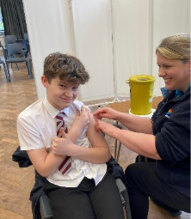
The local NHS School Immunisation team will visit your child's school at various times throughout the year to deliver the childhood vaccination programme.  

When the vaccines are due, you will receive information (often sent via school) which includes instructions for completing the electronic consent form. Please complete the form to indicate if you do or do not consent for your child to receive the vaccination. 

If your child is registered as Electively Home Educated, after you have submitted the completed consent form indicating you wish to have your child vaccinated, you will receive details about booking a community clinic appointment. 

Where the Immunisation team have not received a completed form for your child or your child misses their scheduled vaccination, they will continue to offer the vaccine until the child leaves school or reaches the age of 16 years. 

Which vaccinations will my child/young person need and when? 

Vaccine 

Age / School Year 

Dates 

Flu 

4 to 16 Years 

Year R to Year 11  

(up to Year 13 in some special schools) 

September to December  

every year 

Human Papillomavirus (HPV) 

12 to 13 years 

Year 8 

January to July 

Tetanus, Diphtheria and Polio (Td/IPV) 

13 to 14 Years 

Year 9 

March to July 

Meningitis (MenACWY) 

13 to 14 years 

Year 9 

March to July 

Measles, Mumps and Rubella (MMRV/MMR) and the 4-in-1 pre-school vaccines are offered, where they have been missed. 

You can find more information about the vaccines including contact details and FAQs on HealthforKids  

What additional support is there for children with additional needs? 

The Immunisation team can offer additional support to children where this is required, to enable them to have their vaccine. This may include:

  • Social stories shared by parents, school staff, nurses.
  • Child visit to immunisation session in school/ community clinic to observe what happens at the session
  • Distraction toys / cold spray
  • Longer clinic appointment
  • Dedicated vaccination room
  • Home visit in exceptional circumstances
  • Vaccination alongside medical procedures with sedation / anaesthetic 

The Immunisation team also operate SEND clinics, where individual rooms are allocated and appointment times are longer. 

If you feel your child would benefit from additional support or you would like to book into one of the SEND clinics, please contact the team to discuss this. 

What if I need help? 

If you have any questions about the vaccines, completing the electronic form or would like to discuss adjustments/changes required to support your child having their vaccine, please contact the Immunisation Team. 

How to contact us 

Please contact the Immunisation Team (9am – 4.30pm Monday-Friday excluding Bank Holidays) or send an email to your local Immunisation Team. 

Contact details for the immunisation teams is found here:  

The local NHS School Immunisation team will visit your child's school at various times throughout the year to deliver the childhood vaccination programme.  

When the vaccines are due, you will receive information (often sent via school) which includes instructions for completing the electronic consent form. Please complete the form to indicate if you do or do not consent for your child to receive the vaccination. 

If your child is registered as Electively Home Educated, after you have submitted the completed consent form indicating you wish to have your child vaccinated, you will receive details about booking a community clinic appointment. 

Where the Immunisation team have not received a completed form for your child or your child misses their scheduled vaccination, they will continue to offer the vaccine until the child leaves school or reaches the age of 16 years. 

Which vaccinations will my child/young person need and when? 

Vaccine 

Age / School Year 

Dates 

Flu 

4 to 16 Years 

Year R to Year 11  

(up to Year 13 in some special schools) 

September to December  

every year 

Human Papillomavirus (HPV) 

12 to 13 years 

Year 8 

January to July 

Tetanus, Diphtheria and Polio (Td/IPV) 

13 to 14 Years 

Year 9 

March to July 

Meningitis (MenACWY) 

13 to 14 years 

Year 9 

March to July 

Measles, Mumps and Rubella (MMRV/MMR) and the 4-in-1 pre-school vaccines are offered, where they have been missed. 

You can find more information about the vaccines including contact details and FAQs on HealthforKids  

What additional support is there for children with additional needs? 

The Immunisation team can offer additional support to children where this is required, to enable them to have their vaccine. This may include:

  • Social stories shared by parents, school staff, nurses.
  • Child visit to immunisation session in school/ community clinic to observe what happens at the session
  • Distraction toys / cold spray
  • Longer clinic appointment
  • Dedicated vaccination room
  • Home visit in exceptional circumstances
  • Vaccination alongside medical procedures with sedation / anaesthetic 

The Immunisation team also operate SEND clinics, where individual rooms are allocated and appointment times are longer. 

If you feel your child would benefit from additional support or you would like to book into one of the SEND clinics, please contact the team to discuss this. 

What if I need help? 

If you have any questions about the vaccines, completing the electronic form or would like to discuss adjustments/changes required to support your child having their vaccine, please contact the Immunisation Team. 

How to contact us 

Please contact the Immunisation Team (9am – 4.30pm Monday-Friday excluding Bank Holidays) or send an email to your local Immunisation Team. 

Contact details for the immunisation teams is found here:  

The Family Nurse Partnership (FNP) is a voluntary programme for young parents. A healthy pregnancy gives babies the best possible start in life, and the relationship parents have with their babies right from the start is crucial for their future health and happiness.

  • Support programme for young parents (aged 24 and under)
  • A specially trained nurse provides regular home visits
  • Support from pregnancy until the child is around 1–2 years old


More information

The Family Nurse Partnership (FNP) is a voluntary programme for young parents. A healthy pregnancy gives babies the best possible start in life, and the relationship parents have with their babies right from the start is crucial for their future health and happiness.

  • Support programme for young parents (aged 24 and under)
  • A specially trained nurse provides regular home visits
  • Support from pregnancy until the child is around 1–2 years old


More information

Mental Health Support Teams are an early help service in schools that support children and young people with mild to moderate mental health difficulties.

They aim to make it easier to access mental health support and help schools create a positive, whole‑school approach to wellbeing.

MHSTs are part of a national rollout, so more schools are being added over time, but full coverage hasn’t been reached yet. Ask your child's school if they are part of the scheme.

Watch the video to find out more


Support for children and families

MHST practitioners work directly with young people and parents to:

  • Provide talking therapies (such as CBT) to help manage difficulties like anxiety, low mood, worries, sleep problems or behaviour challenges
  • Offer support 1:1, in groups, or sometimes working with parents depending on what’s needed
  • Deliver sessions face-to-face or online

Support within schools

They also work closely with schools to:

  • Help improve how schools support mental health and wellbeing
  • Provide training, workshops and advice for staff
  • Offer consultation and guidance on supporting pupils
  • Contribute to a whole-school approach to mental health

Working with other services

MHST link with other professionals (e.g. CAMHS teams, school nurses, educational psychologists) to:

  • Make sure children get the right level of support
  • Signpost or refer on if more specialist help is needed

How to access

  • The service is based in specific schools, so availability depends on whether your child’s school has a team
  • Referrals are usually made through the school

Mental Health Support Teams are an early help service in schools that support children and young people with mild to moderate mental health difficulties.

They aim to make it easier to access mental health support and help schools create a positive, whole‑school approach to wellbeing.

MHSTs are part of a national rollout, so more schools are being added over time, but full coverage hasn’t been reached yet. Ask your child's school if they are part of the scheme.

Watch the video to find out more


Support for children and families

MHST practitioners work directly with young people and parents to:

  • Provide talking therapies (such as CBT) to help manage difficulties like anxiety, low mood, worries, sleep problems or behaviour challenges
  • Offer support 1:1, in groups, or sometimes working with parents depending on what’s needed
  • Deliver sessions face-to-face or online

Support within schools

They also work closely with schools to:

  • Help improve how schools support mental health and wellbeing
  • Provide training, workshops and advice for staff
  • Offer consultation and guidance on supporting pupils
  • Contribute to a whole-school approach to mental health

Working with other services

MHST link with other professionals (e.g. CAMHS teams, school nurses, educational psychologists) to:

  • Make sure children get the right level of support
  • Signpost or refer on if more specialist help is needed

How to access

  • The service is based in specific schools, so availability depends on whether your child’s school has a team
  • Referrals are usually made through the school

You can usually access Child Health Services through:

  • Your GP
  • Your child’s school or nursery
  • A health visitor or school nurse
  • Other professionals supporting your child

Some services may accept self-referrals or offer open access support. 

👉 Find out more about Child Health Services

You can usually access Child Health Services through:

  • Your GP
  • Your child’s school or nursery
  • A health visitor or school nurse
  • Other professionals supporting your child

Some services may accept self-referrals or offer open access support. 

👉 Find out more about Child Health Services

🧒 5–19 years: School Nursing Service

The School Nursing / Community Public Health Nursing Service supports children and young people aged 5–19 with their physical health, emotional wellbeing and healthy lifestyles.

Support can take place at school, at home or in community settings, and is available to all children and young people (including those not in school).

👉 More Information

📩 Referrals

Parents, carers and professionals:
You can refer a child or young person to the 5–19 service online.

👉 Make a referral to the 5–19 service

Young people:
Young people can contact the service themselves for advice and support.

👉 Self-refer to the 5–19 service

Special school nursing team

Who Are the Special School Nursing Team?

The Special School Nursing Team is a group of trained nurses who help children aged 2 to 19 who have special educational needs or disabilities. They work in six special schools across Hampshire.

Their job is to make sure children with extra health needs can stay in school safely and take part in learning as much as possible.

The nurses work school hours, term-time only, and they sometimes move between the different schools.

They also work with the general school nursing team, who give routine immunisations and help with advice about healthy living.

How the Team Looks After Your Child’s Information

The nurses keep your child’s personal information safe and private. They only share it with other professionals when it is necessary for your child’s care.
Parents are asked to sign a form to allow this information sharing while their child attends the school.

If your contact details change (like a new phone number), the school updates the nursing team so they always have the correct information.

What Do the Special School Nursing Team Do?

The nurses help children every day in many ways, including:

Looking After Medicines

  • They safely store and give pupils their prescribed medication, following important health guidelines.

Helping in Emergencies

  • They know what to do if a child has a seizure, severe allergic reaction, trouble breathing, or other medical emergencies.

Planning and Checking Children’s Care

  • They assess each child’s health needs.
  • They write care plans and check regularly to make sure each child’s care stays safe and effective.

Supporting Clinics in School

  • They help with school‑based clinics like:
    • Consultant appointments
    • Dental clinics
    • Orthotic clinics

Keeping Children Safe

  • They work with the school to help safeguard pupils.
  • They keep an eye on vulnerable children and take part in meetings if a child needs extra protection or support.

Helping with Transitions

  • They support children when they move:
    • from primary to secondary school, and
    • from child services to adult health services.

How to Contact the Team

You can speak to the Special School Nursing Team by calling the main reception of your child’s school and leaving a message for the nurse.

If you have comments or worries—good or bad—the team welcomes feedback to help improve their service.

Contact your child's school's Specialist Community Public Health Nurse

🧒 5–19 years: School Nursing Service

The School Nursing / Community Public Health Nursing Service supports children and young people aged 5–19 with their physical health, emotional wellbeing and healthy lifestyles.

Support can take place at school, at home or in community settings, and is available to all children and young people (including those not in school).

👉 More Information

📩 Referrals

Parents, carers and professionals:
You can refer a child or young person to the 5–19 service online.

👉 Make a referral to the 5–19 service

Young people:
Young people can contact the service themselves for advice and support.

👉 Self-refer to the 5–19 service

Special school nursing team

Who Are the Special School Nursing Team?

The Special School Nursing Team is a group of trained nurses who help children aged 2 to 19 who have special educational needs or disabilities. They work in six special schools across Hampshire.

Their job is to make sure children with extra health needs can stay in school safely and take part in learning as much as possible.

The nurses work school hours, term-time only, and they sometimes move between the different schools.

They also work with the general school nursing team, who give routine immunisations and help with advice about healthy living.

How the Team Looks After Your Child’s Information

The nurses keep your child’s personal information safe and private. They only share it with other professionals when it is necessary for your child’s care.
Parents are asked to sign a form to allow this information sharing while their child attends the school.

If your contact details change (like a new phone number), the school updates the nursing team so they always have the correct information.

What Do the Special School Nursing Team Do?

The nurses help children every day in many ways, including:

Looking After Medicines

  • They safely store and give pupils their prescribed medication, following important health guidelines.

Helping in Emergencies

  • They know what to do if a child has a seizure, severe allergic reaction, trouble breathing, or other medical emergencies.

Planning and Checking Children’s Care

  • They assess each child’s health needs.
  • They write care plans and check regularly to make sure each child’s care stays safe and effective.

Supporting Clinics in School

  • They help with school‑based clinics like:
    • Consultant appointments
    • Dental clinics
    • Orthotic clinics

Keeping Children Safe

  • They work with the school to help safeguard pupils.
  • They keep an eye on vulnerable children and take part in meetings if a child needs extra protection or support.

Helping with Transitions

  • They support children when they move:
    • from primary to secondary school, and
    • from child services to adult health services.

How to Contact the Team

You can speak to the Special School Nursing Team by calling the main reception of your child’s school and leaving a message for the nurse.

If you have comments or worries—good or bad—the team welcomes feedback to help improve their service.

Contact your child's school's Specialist Community Public Health Nurse
ChatHealth is a free, confidential text messaging service that allows parents and carers to contact a qualified nurse for advice and support about their child or family’s health and wellbeing.

Parents can text a question or concern and receive a response from an experienced health visitor or school nurse, who can:

  • Offer advice and reassurance on a wide range of issues
  • Help with health, development, behaviour, sleep, emotional wellbeing and more
  • Signpost to other services if additional or specialist support is needed

The service is:

  • Easy to use – just send a text message with your question
  • Confidential – conversations are private
  • Non‑judgemental – you can ask any question, big or small
  • Flexible – you can text at a time that suits you, with replies usually within one working day if outside opening hours

Separate text lines are available depending on your child’s age (e.g. under 5s or school‑aged children), ensuring advice comes from the most relevant team.

ChatHealth contact numbers for parents

  • Parents of children aged 0–5 years
    Text: 07520 615720  
  • Parents of children and young people aged 5–19 years
    Text: 07507 332417

ChatHealth is a free, confidential text messaging service that allows parents and carers to contact a qualified nurse for advice and support about their child or family’s health and wellbeing.

Parents can text a question or concern and receive a response from an experienced health visitor or school nurse, who can:

  • Offer advice and reassurance on a wide range of issues
  • Help with health, development, behaviour, sleep, emotional wellbeing and more
  • Signpost to other services if additional or specialist support is needed

The service is:

  • Easy to use – just send a text message with your question
  • Confidential – conversations are private
  • Non‑judgemental – you can ask any question, big or small
  • Flexible – you can text at a time that suits you, with replies usually within one working day if outside opening hours

Separate text lines are available depending on your child’s age (e.g. under 5s or school‑aged children), ensuring advice comes from the most relevant team.

ChatHealth contact numbers for parents

  • Parents of children aged 0–5 years
    Text: 07520 615720  
  • Parents of children and young people aged 5–19 years
    Text: 07507 332417

Family Assist is an easy-to-use online portal that brings together trusted information, advice and local support for parents and families during pregnancy and the early years.

Instead of being given lots of leaflets and mixed messages, families can access clear, reliable information in one place, anytime, on their phone, tablet or computer. All content is written or approved by local health professionals, so you can feel confident the advice is up to date and trustworthy.

What Family Assist offers:

  • A personalised child record that shares the right information at the right time, from pregnancy onwards. Important emails are sent when they are most relevant to you and your child's life, and family and friends can be included by inviting them to join the record so everyone supporting your child stays up-to-date and informed.
  • An Ask a Question feature that lets you contact local health visiting and school nursing teams directly, with a response within 2 working days.
  • A wide range of trusted information in the online library to guide you through parenthood, including local parent education and support options, healthy eating for you and your child, child development and behaviour, and much more.

By keeping information simple, timely and consistent, Family Assist helps families feel informed, supported and confident in giving their child the best start in life.

Sign up for an account and create a child record by visiting the Family Assist website

Family Assist is an easy-to-use online portal that brings together trusted information, advice and local support for parents and families during pregnancy and the early years.

Instead of being given lots of leaflets and mixed messages, families can access clear, reliable information in one place, anytime, on their phone, tablet or computer. All content is written or approved by local health professionals, so you can feel confident the advice is up to date and trustworthy.

What Family Assist offers:

  • A personalised child record that shares the right information at the right time, from pregnancy onwards. Important emails are sent when they are most relevant to you and your child's life, and family and friends can be included by inviting them to join the record so everyone supporting your child stays up-to-date and informed.
  • An Ask a Question feature that lets you contact local health visiting and school nursing teams directly, with a response within 2 working days.
  • A wide range of trusted information in the online library to guide you through parenthood, including local parent education and support options, healthy eating for you and your child, child development and behaviour, and much more.

By keeping information simple, timely and consistent, Family Assist helps families feel informed, supported and confident in giving their child the best start in life.

Sign up for an account and create a child record by visiting the Family Assist website

The Growing Little Minds team is a specialist health visiting service for babies aged 0–2 and their families.

They focus on early relationships, emotional development and bonding, helping parents understand and respond to their baby’s needs. Early support can improve a baby’s emotional wellbeing, brain development and resilience.

Referrals are usually made through your health visitor or other health professionals.

👉 Learn more about Growing Little Minds

The Growing Little Minds team is a specialist health visiting service for babies aged 0–2 and their families.

They focus on early relationships, emotional development and bonding, helping parents understand and respond to their baby’s needs. Early support can improve a baby’s emotional wellbeing, brain development and resilience.

Referrals are usually made through your health visitor or other health professionals.

👉 Learn more about Growing Little Minds

If you are looking for support with your child or young person’s healthy weight, eating, activity levels or lifestyle habits, you can get help from the School Nursing (5–19) service.

They can offer advice, guidance and targeted support to help children and young people make healthy lifestyle changes.

👉 Refer to the 5–19 School Nursing Service

Young people can also contact the service themselves for support.

Additional specialist support (if needed)

Some children and young people may need more specialist support with their weight and related health needs.

The Complications of Excess Weight (CEW) Service is a specialist NHS service for children (up to 18) who have health concerns linked to excess weight, such as diabetes, sleep issues or emotional wellbeing difficulties.

The service provides:

  • Personalised support plans for each child
  • Advice on diet, activity and behaviour
  • Support from a team of specialists (including doctors, dietitians and psychologists)

Referrals to this service are made by a healthcare professional (for example, via your GP or community health services).

💡 Quick note

Most families will start with the 5–19 School Nursing Service, who can offer advice or help you access more specialist support if needed.

If you are looking for support with your child or young person’s healthy weight, eating, activity levels or lifestyle habits, you can get help from the School Nursing (5–19) service.

They can offer advice, guidance and targeted support to help children and young people make healthy lifestyle changes.

👉 Refer to the 5–19 School Nursing Service

Young people can also contact the service themselves for support.

Additional specialist support (if needed)

Some children and young people may need more specialist support with their weight and related health needs.

The Complications of Excess Weight (CEW) Service is a specialist NHS service for children (up to 18) who have health concerns linked to excess weight, such as diabetes, sleep issues or emotional wellbeing difficulties.

The service provides:

  • Personalised support plans for each child
  • Advice on diet, activity and behaviour
  • Support from a team of specialists (including doctors, dietitians and psychologists)

Referrals to this service are made by a healthcare professional (for example, via your GP or community health services).

💡 Quick note

Most families will start with the 5–19 School Nursing Service, who can offer advice or help you access more specialist support if needed.